

Launching a new product often marks a major milestone in a company’s lifecycle. Whether it is a technological innovation, a new product line, a service, or a new brand identity, making a strong first impression on the public is essential.
A launch event brings this innovation to life in a tangible way. Rather than simply communicating through an advertisement or a social media post, the company invites its clients, partners, journalists, and employees to experience the product in a specially designed environment.
When well-organized, a product launch can help:
Raise awareness of a new product among its target audience.
Showcase the product’s features and benefits.
Create a positive first experience around the brand.
Generate press coverage and social media posts.
Strengthen relationships with clients and partners.
Spark new connections and commercial opportunities.
However, a successful event goes beyond simply presenting a product to an audience. It must tell a story, spark curiosity, and inspire attendees to extend the experience long after the evening ends.
1. Define the Launch Objectives
Before selecting a venue or contacting vendors, you need to determine precisely what the company wants to achieve through its event.
While a product launch can serve multiple goals, it is best to identify one primary priority.
For example:
Brand awareness: Introducing the product to as wide an audience as possible.
Media visibility: Attracting journalists, influencers, and content creators.
Lead generation: Meeting potential clients and acquiring qualified contacts.
Customer loyalty: Thanking existing clients and giving them an exclusive preview of something new.
Business relationships: Winning over distributors, partners, or investors.
Internal communication: Rallying teams around a new project.
These objectives will directly influence the event format, guest list, schedule, and budget. A launch aimed at the press and influencers will not be organized in the same way as a presentation reserved for clients and business partners.
2. Identify the Target Guest List
The success of a launch largely depends on the quality of its attendees.
Filling a room is not enough; you need to gather the people most likely to take an interest in the product, talk about it, or contribute to its commercial growth.
Depending on the nature of the launch, the guest list may include:
Current and prospective clients.
Trade and mainstream journalists.
Influencers and content creators.
Distributors and business partners.
Industry representatives.
Investors or financial partners.
Employees and executive leadership.
It is also worthwhile to distinguish VIP or priority guests from general attendees. Certain guests can be offered a private presentation, a personalized demonstration, or early access to the product. This segmentation allows you to tailor invitations and curate a more relevant experience for each visitor category.
3. Build a Concept and Experience Around the Product
A product launch must be instantly recognizable. Attendees should quickly grasp what is being unveiled, why it matters, and what makes it compelling.
The event concept must therefore align closely with the product's positioning and the brand's identity.
Examples of possible formats:
An official presentation: A keynote speech by leadership or the product manager introduces the new release, its origins, features, and benefits.
A launch party: A more social format—combining guest welcome, product unveiling, entertainment, and a reception—is ideal for brand launches or consumer-facing products.
A live demonstration: For technical or innovative products, a live demo showcases how the product works and what it can do in practice.
An immersive experience: Stage design, screens, projections, sound, and demo zones can be used to immerse guests in the world of the product.
A hybrid launch: The event can also be livestreamed online to reach people who cannot attend in person.
Above all, avoid packing in entertainment without a clear purpose. Every element should contribute to product discovery and reinforce the brand message.
4. Choose the Right Venue for the Launch
Selecting the venue is one of the most critical decisions in the planning process.
A space that is too small can restrict demonstrations and impede foot traffic. Conversely, an overly large hall risks feeling empty if attendance is modest.
The venue should be evaluated based on several criteria:
Expected number of guests.
Accessibility by car and public transit.
Parking availability.
Room layout and configuration.
Available audiovisual equipment.
Setup and customization options.
Space required for demonstrations and networking.
Catering and reception capabilities.
Guest flow is equally important. Attendees should be able to move seamlessly from the welcome area to the presentation stage, and then on to the demo zones and reception space.
For a product launch, a modular venue is often a major asset. It allows you to create distinct atmospheres within a single event: a presentation area, an exhibition zone, a networking lounge, and a reception space.
Why choose an event venue in Brussels?
Brussels is a strategic location for hosting a product launch. The Belgian capital offers a central location, strong international accessibility, and a dynamic business ecosystem home to numerous companies, institutions, and organizations.
For companies inviting guests from across Belgium or abroad, choosing an easily accessible venue can make a real difference. Prioritizing a space that combines suitable capacity, professional equipment, and parking solutions is therefore a smart move.
5. Prepare a Memorable Product Presentation
The presentation is typically the centerpiece of the event. It must be clear enough for attendees to understand the product quickly, yet dynamic enough to hold their attention.
An effective presentation can follow this structure:
The context: What need or problem inspired the creation of the product?
The innovation: What is being unveiled, and what makes it different?
The benefits: What tangible value does it bring to users?
The demonstration: How does it work in real life?
The next steps: When will it be available, and how can people get it?
Avoid presentations that are overly long or excessively technical. While product specs matter, attendees primarily need to understand the benefits they stand to gain.
Visual aids also play a vital role. A big-screen presentation, a launch video, or a live demo can significantly amplify the impact of your message.
6. Plan Engaging Activities and Demonstrations
A product launch should give guests the opportunity to experience the innovation beyond passively listening to a speech.
Depending on the product and audience, several interactive elements can be considered:
Dedicated demo stations open throughout the event.
Hands-on product trials or testing.
One-on-one walkthroughs led by product specialists.
Interactive kiosks or touchscreens.
Augmented reality (AR) or virtual reality (VR) experiences.
Practical workshops.
Photo and video booths.
Meet-and-greets with the team that developed the product.
These activations must remain consistent with your brand positioning. A luxury product requires a very different experience than one geared toward a young or family-oriented audience. The goal is to allow guests to understand, test, and remember the new release.
7. Establish a Realistic Budget
Your budget will depend primarily on the guest count, venue, desired production level, and required services. It is important to map out the main expense categories right from the start of the project.
Expense Category | Items to Plan For |
Venue Rental | Main hall, breakout spaces, furniture |
Technical / AV | Sound system, lighting, screens, microphones |
Scenography | Decor, signage, space layout and staging |
Catering | Food, beverages, service staff |
Communication | Invitations, graphic materials, videos |
Entertainment | Host/MC, speakers, live demonstrations |
Photo & Video | Photographer, videographer, event recording |
Logistics | Transport, setup, security, guest reception |
Miscellaneous | Insurance, contingencies, and additional fees |
It is strongly recommended to set aside a contingency reserve for unexpected expenses—a buffer of 10% to 15% of the overall budget is a reasonable starting point.
Most importantly, allocate resources based on your objectives. If the live product demo is the highlight of the evening, dedicate a substantial portion of the budget to AV and staging rather than spreading funds thin across secondary details.
8. Manage Invitations and Communications
Communication shouldn't start on the day of the event—it is an integral part of your launch strategy.
Send out a "Save the Date" several weeks in advance. The official invitation should then clearly state the essential details:
Date and time.
Address and access/parking instructions.
Evening schedule.
Registration details (RSVP).
Any specific instructions or dress code.
Sending a reminder a few days before the event helps minimize no-shows and confirm final headcount.
Social media can also help build anticipation. Teaser posts, sneak-peek product images, short videos, or cryptic announcements can spark curiosity ahead of time. For press-focused launches, prepare a digital or physical press kit containing key product information, high-resolution visuals, and media contact details.
9. Create a Detailed Run-of-Show
A well-run event relies on clear pacing. Attendees need to know where to go and when key moments take place, while the organizing team needs a detailed schedule to coordinate speakers and vendors.
Sample schedule for an evening launch:
Time | Activity |
6:00 PM | Guest arrival and badge pickup |
6:30 PM | Welcome cocktail and exploration of spaces |
7:00 PM | Opening remarks |
7:15 PM | Official product presentation |
7:35 PM | Live demonstration and real-world showcase |
8:00 PM | Q&A with the teams and hands-on product testing |
8:30 PM | Reception and networking |
10:00 PM | End of event |
Naturally, this schedule should be adapted to your chosen format. A press briefing may be shorter and more tightly structured, whereas a client-facing evening should leave ample room for mingling and conversation.
10. Don't Overlook Technical and Logistical Details
Technical glitches can quickly derail a product launch. A video that fails to play, a faulty microphone, or a malfunctioning demo can undermine the biggest moment of the night.
Be sure to arrange:
A full sound check.
Testing of all screens and video connections.
Appropriate microphones for all speakers.
A backup file/system for video presentations.
A stable, high-speed internet connection (if required).
A full dress rehearsal before guests arrive.
An on-site technician present throughout the event.
You must also plan the practical logistics: equipment delivery, space setup, signage, registration desk management, and teardown. Share a detailed load-in/setup schedule with all vendors so everyone knows their exact arrival times and responsibilities.
11. Have a Plan B Ready
Even with meticulous preparation, unexpected issues can arise. A technical failure, a delayed speaker, a delivery hiccup, or a last-minute change in attendance can disrupt the flow of the event.
To mitigate risks, prepare practical backup solutions:
A pre-recorded video of the demonstration in case a live demo fails.
A backup laptop and presentation files on a USB drive/cloud.
A slightly flexible schedule with built-in buffer time.
Direct phone numbers for every vendor and key contact.
An indoor contingency plan for outdoor spaces in case of bad weather.
A clear emergency procedure.
Having these contingencies in place allows the organizing team to pivot smoothly without guests ever realizing there was a hiccup.
12. Extend the Momentum After the Launch
A product launch doesn't end when the last guest leaves the building. Post-event follow-up is essential to turn the excitement generated during the event into tangible results.
In the days following the launch, your company can:
Send a thank-you email to all attendees.
Share photos and highlight videos from the event.
Distribute additional product documentation or brochures.
Follow up with interested leads and prospects.
Send a post-event press release to journalists.
Post an event recap on social media.
Offer one-on-one meetings or personalized follow-up demos.
It is also vital to measure your results. Key performance indicators (KPIs) to track include:
Number of invitations sent.
Registration count vs. actual attendance.
Number of commercial leads generated.
Number of demo requests booked.
Press mentions and media coverage.
Social media posts, reach, and engagement.
Qualitative feedback from attendees.
These insights will help evaluate the launch's ROI and refine your approach for future events.
13. Common Mistakes to Avoid During a Product Launch
Several recurring pitfalls can undermine corporate event planning:
Choosing a venue solely based on price: A budget venue isn't always suitable. Accessibility, AV infrastructure, and room layout must factor into the decision.
Overloading the schedule: Guests need breathing room to explore the product and converse with your team.
Delivering a presentation that is too long: Keep your message crisp, engaging, and focused on customer benefits.
Neglecting live demonstrations: A product is far more persuasive when people can test it or see it in action.
Underestimating technical needs: All audiovisual equipment must be tested well before doors open.
Forgetting commercial follow-up: Leads captured during the event must be contacted promptly while interest is high.
Skipping a contingency plan: A solid Plan B lets you handle surprises seamlessly without compromising the guest experience.
14. Dome Eventhall: A Venue to Consider for Your Product Launch in Brussels
Your choice of venue directly shapes the lasting impression guests take away from your event. For a company looking to unveil a new product in a professional setting, having a modular space with tailored infrastructure can make all the difference.
Located in Brussels, Dome Eventhall offers versatile options for corporate events, including product launches, company presentations, and receptions.
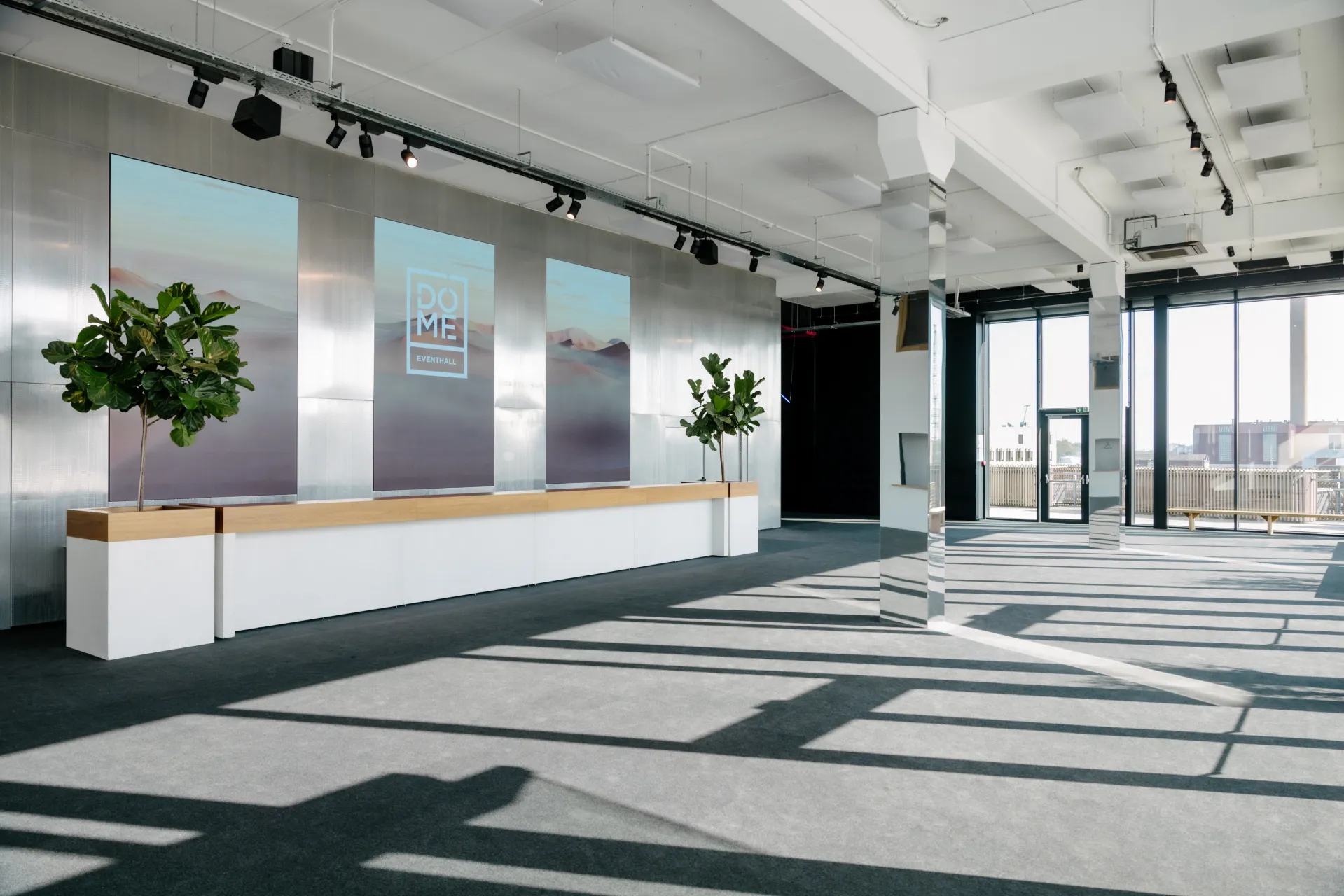
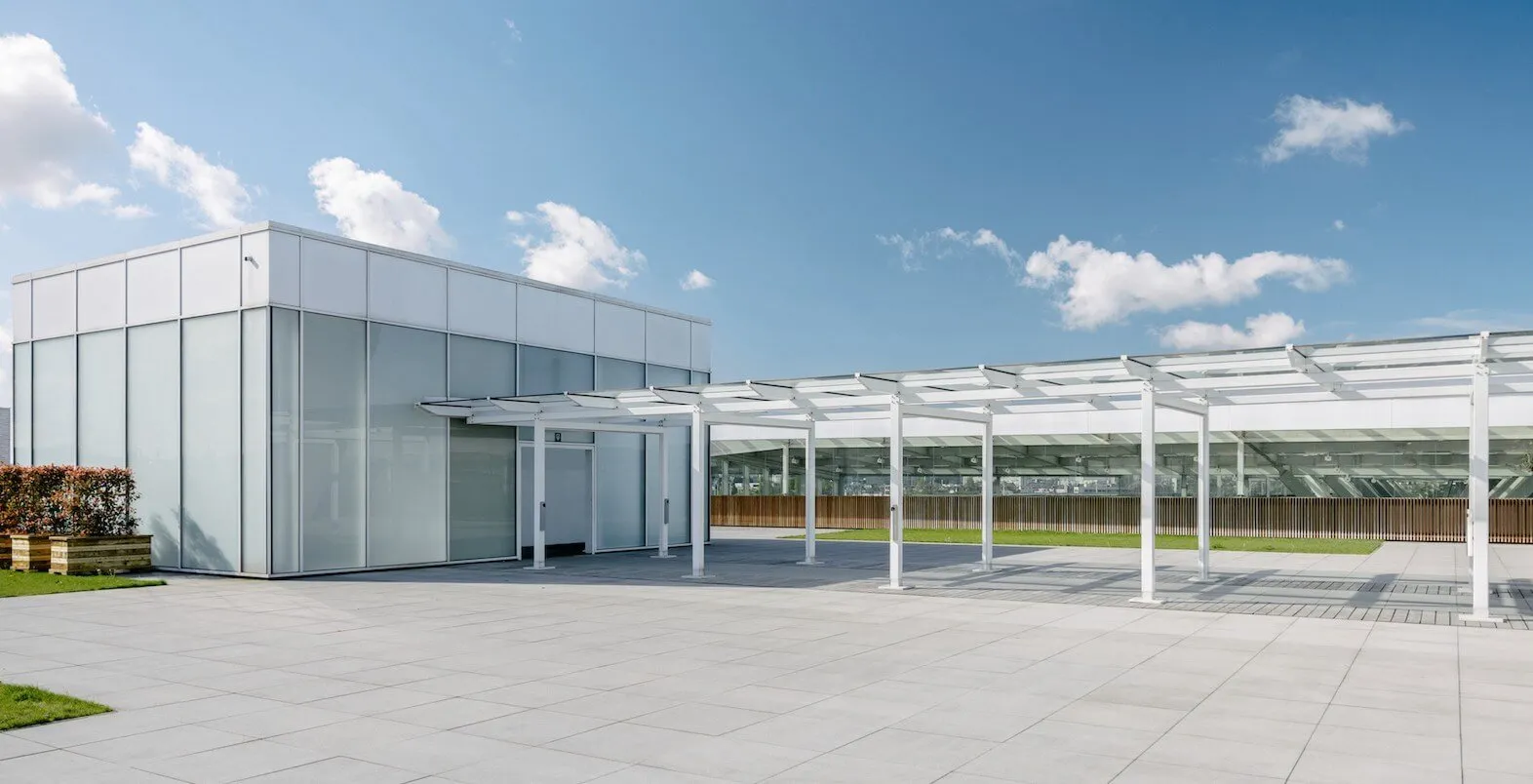
Its 927 m² main hall accommodates a wide range of layouts, with a capacity of up to 1,400 guests standing, depending on the chosen setup. The venue also features breakout spaces and outdoor terraces, enabling you to create distinct atmospheres within a single event.
Key features for event organizers include:
A large, modular space with an intentionally neutral, minimalist design, offering extensive customization possibilities (screens, colored LED lighting, branding zones, interchangeable backdrops) to welcome guests and showcase your product.
Flexible layouts suited for both keynote presentations and interactive demo zones.
Technical infrastructure to support speeches and audiovisual productions.
Breakout spaces ideal for workshops, VIP lounges, or one-on-one meetings.
Ample parking nearby, along with excellent public transit access (train, tram, bus, and bike).
Whether you are planning a formal keynote, an exclusive client evening, or a combined press and partner event, the space can be tailored to fit your format and project requirements.
Planning a new product launch in Brussels? Explore the possibilities offered by Dome Eventhall and design an event tailored to your brand, your audience, and your goals.
A successful product launch relies on more than just the innovation itself. It depends on how that innovation is showcased, the experience curated for guests, and the communication strategy supporting the event.
By clearly defining your objectives, selecting the right venue, crafting an impactful presentation, and anticipating technical details, you set your launch up for success. A thoughtfully executed event doesn't just introduce a product—it builds an immediate connection with your audience and gives real momentum to your commercial growth.